Views: 0 Author: Site Editor Publish Time: 2025-10-21 Origin: Site
Have you ever noticed how a bookmark can change the feel of reading? It's not just a strip of paper — it reflects your taste and habits. The thickness of a bookmark affects comfort, page flow, and even how long it lasts. Too thick feels heavy; too thin slips away.
In this post, you'll learn what the best thickness for bookmarks is, how it influences usability, and how to choose the right one for your reading style.
Key takeway
What thickness is ideal for a bookmark?
How does thickness affect usability?
How to choose the right thickness based on materials and reading scenarios?
Bookmarks are small, but they make a big difference. They protect books, guide readers, and often carry personal meaning.
A good bookmark does more than hold a place. It keeps pages clean and flat, stopping those dreaded dog-eared corners. Readers who care about their books never want creased or folded pages. Bookmarks also help readers return to the right page instantly. You don't waste time flipping through chapters or guessing where you left off. It saves effort, keeps focus, and makes reading smoother.
| Function | Why It Matters | Reader Benefit |
|---|---|---|
| Prevents folds or page damage | Protects paper and spine | Keeps books looking new |
| Marks your progress | Easy page tracking | No lost spots, faster return |
| Adds reading rhythm | Creates habit and comfort | More relaxed experience |
Bookmarks often hold memories. A handmade one from a friend, or a souvenir from a favorite bookstore — they mean something. They're collectibles, tokens of stories, sometimes even gifts shared among readers. Their designs tell stories too. Elegant prints, metallic finishes, or even wooden textures turn a bookmark into art. For some, it's not just a tool — it's an extension of personality. They remind us that reading isn't just about words. It's also about beauty, comfort, and the small joy of turning a page your way.
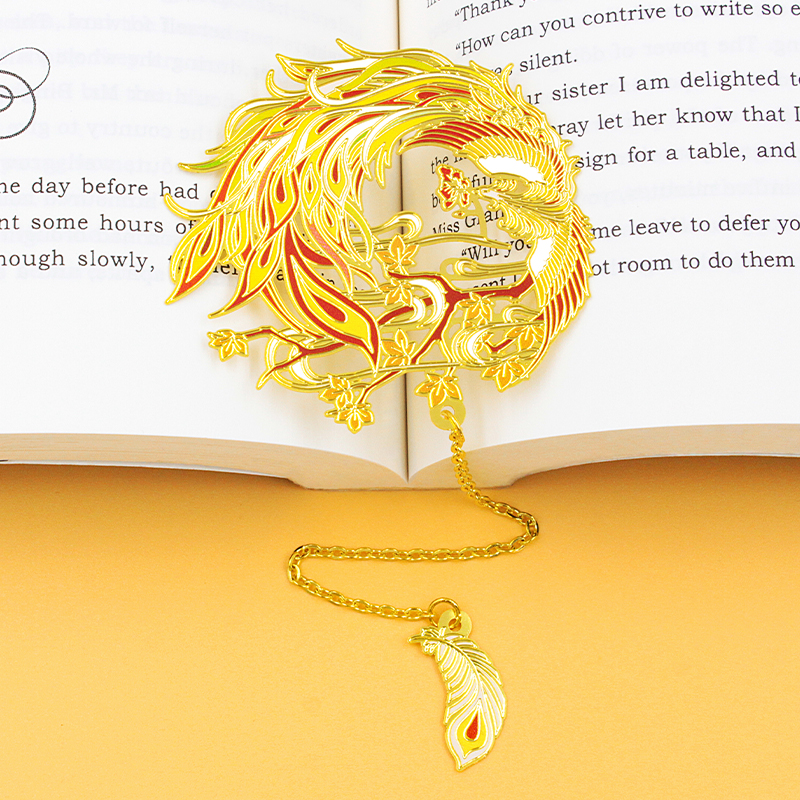
Bookmark thickness changes how we read, hold, and even feel about a book. You wouldn't want a bookmark's thickness to ruin its purpose — keeping your place effortlessly, not interrupting your flow. Too thick or too thin, it subtly changes how comfortable and natural reading feels.
A thick bookmark looks strong, but it can feel clumsy. When it's over 0.5 mm or made of stiff metal or wood, problems start.
It pressures the spine and pages, leaving marks or dents.
It creates bulges so the book won't close flat.
It's hard to slide in or pull out without catching the paper.
It works better as a display or collectible item, not an everyday reading tool.
| Issue | How It Feels to the Reader | Result |
|---|---|---|
| Page pressure | Feels tight or uneven | Book doesn't close well |
| Bulky shape | Distracts from text | Reading rhythm breaks |
| Hard edges | Catches paper or scrapes corners | Possible page damage |
| Heavy feel | Adds weight and stiffness | Not travel-friendly |
Thin bookmarks feel light at first—until they fold, slip, or disappear. Anything under 0.25 mm tends to lose shape quickly.
It bends and tears easily, especially when pages shift.
It slides out while flipping through the book.
It can't handle embossing or hot-stamping, so design options shrink.
It fits best for short-term use or event giveaways where cost matters.
| Issue | Effect on Reader | Experience |
|---|---|---|
| Too flexible | Hard to grasp | Feels fragile |
| Slips out | Loses position | Reader gets frustrated |
| No support for finishes | Simple look only | Lacks personality |
| Easily wrinkled | Looks worn fast | Short lifespan |
It's practical for mass printing, but it rarely lasts beyond a few reads.
Somewhere between soft and stiff lies the sweet spot. The ideal bookmark feels firm, flexible, and smooth between your fingers. It should keep its shape, slide easily between pages, and never push the book open. Finding that balance makes reading effortless and enjoyable. Next, we'll explore the best bookmark thickness for different materials and scenarios — so you can choose the one that perfectly fits your reading style.
Bookmark thickness mainly depends on its material — paper, plastic, metal, wood, or silicone. Each type has its own ideal range, affecting how it feels, bends, and fits between pages.
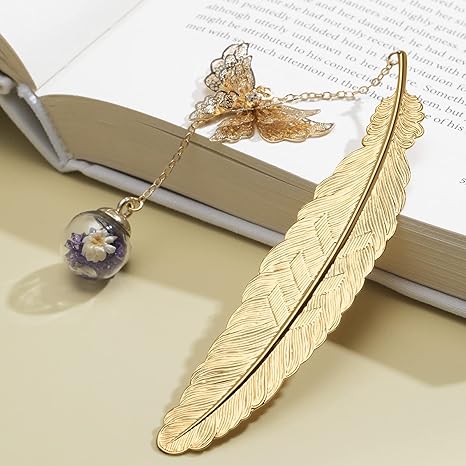
Paper bookmarks remain the most popular and practical choice. They're light, affordable, and versatile — perfect for everyday readers. The best thickness is 0.3 – 0.4 mm (≈ 250–350 gsm). This range gives just enough stiffness to hold its shape while staying slim between pages. Too thin, and it bends or wrinkles; too thick, and it may lift the page slightly. That's why this mid-range thickness works well for mass printing, libraries, and bookshop promotions.
| Feature | Why It Matters |
|---|---|
| 0.3–0.4 mm thickness | Firm but flexible; fits easily between pages |
| Smooth surface | Supports sharp printing and vivid colors |
| Lightweight build | Easy to distribute in large volumes |
If durability matters more than texture, plastic bookmarks are a smart upgrade. They're waterproof, tear-resistant, and long-lasting, ideal for humid climates or readers who carry books on the go. The optimal thickness is 0.3 – 0.5 mm — thin enough to flex, thick enough to resist creasing. Plastic doesn't absorb moisture or stain easily, making it perfect for reusable designs or outdoor reading. Readers who want a bookmark that survives coffee spills or travel backpacks will love this material.
| Property | Benefit |
|---|---|
| 0.3–0.5 mm thickness | Balanced feel; won't bend or break |
| Waterproof | Suitable for beaches, cafés, or outdoor reading |
| Durable surface | Keeps artwork clean and vivid |
Metal bookmarks bring luxury and precision to reading. The best thickness is 0.25 – 0.3 mm, thin enough to avoid bulging the book yet solid enough to last a lifetime. This narrow range is crucial: any thicker may dent paper, any thinner can warp or cut edges. Choose materials like stainless steel, brass, or anodized aluminum, and always finish them with rounded corners for safety. They make excellent keepsakes, awards, or collector pieces — less for daily use, more for design appeal.

Best features:
Minimal thickness offers elegance without page damage.
Suitable for etching, laser cutting, or electroplating.
Feels cool and premium in hand.
| Specification | Purpose |
|---|---|
| 0.25–0.3 mm metal sheet | Slides easily between pages, prevents pressure marks |
| Polished finish | Enhances shine and prevents rust |
| Smooth edges | Safe handling and book protection |
For readers who love craftsmanship and nature, wooden bookmarks are a timeless favorite. The ideal thickness is 0.7 – 0.9 mm, ensuring durability without forcing the book to stay open. Wood's organic texture adds warmth and authenticity, especially when engraved or laser-cut. To prevent splinters or scratches, surfaces should be finely polished and edges rounded. This thickness keeps them sturdy but still page-friendly, perfect for artisan, eco-friendly, or gift collections.
| Feature | Why It Works |
|---|---|
| 0.7–0.9 mm thickness | Thick enough to stay rigid, thin enough to fit smoothly |
| Natural material | Appeals to sustainable lifestyles |
| Polished finish | Protects both paper and hands |
For children or casual readers, silicone and EVA foam bookmarks are fun, colorful, and safe. They combine softness with flexibility — perfect for young hands. The recommended thickness is 0.5 – 1.5 mm, depending on design complexity.
This thickness allows shapes like animals, cartoons, or 3D figures while staying gentle on paper. They don't tear, don't absorb water, and easily wipe clean after play.
Great for schools, kids' reading programs, or outdoor events.
Can double as decoration or toy-style clips.
| Material | Best Thickness | Key Advantage |
|---|---|---|
| Silicone | 0.8–1.2 mm | Soft, durable, safe for children |
| EVA foam | 0.5–1.0 mm | Lightweight, colorful, waterproof |
Each material's “best thickness” exists for a reason — to balance comfort, protection, and design flexibility. The right choice depends on how often you read, where you use it, and how much personality you want your bookmark to show.
Finding the right bookmark thickness isn't just about material — it's also about how you use it. A daily reader, a gift collector, or a brand designer will each need something different. Let's break it down by scenario, so you can pick the perfect match for your purpose.
For novels, textbooks, or study guides, 0.25–0.35 mm hits the sweet spot. It's slim, light, and doesn't interrupt page flow. Readers can flip pages quickly, and the bookmark stays put without bulging the spine.
Best for students, office readers, or travel-friendly books.
Paper and thin plastic both feel comfortable and practical.
Works great for simple printing, laminating, or matte coating.
When brands or schools give bookmarks in bulk, price and portability matter. The 0.25–0.30 mm range provides balance — affordable, flexible, and light. It's thin enough to mail easily, yet strong enough to survive frequent handling.
Ideal for marketing campaigns or library events.
Works best with coated card stock or PP plastic.
Smooth printing surfaces help display logos and colors clearly.
Collectors and gift buyers look for something that feels lasting. For them, a slightly thicker bookmark feels more substantial. Use 0.35–0.50 mm for paper and 0.25–0.30 mm for metal to achieve that luxurious balance.
Great for art-themed or branded sets.
Materials like metallic paper, wood veneer, or etched steel add visual appeal.
The added thickness supports embossing, laser engraving, or foil stamping.
Kids' bookmarks need to survive sticky fingers and rough pages. Materials like PP, silicone, or EVA foam work best. A thickness between 0.4–1.0 mm keeps them flexible and safe without tearing.
Soft texture prevents injury or paper damage.
Waterproof and washable — ideal for classrooms or outdoor reading.
Fun shapes and colors make reading more exciting for young readers.
| Scenario | Recommended Thickness | Material Suggestion | Reasoning |
|---|---|---|---|
| Daily Reading (Novels, Textbooks) | 0.25–0.35 mm | Paper / Thin Plastic | Thin enough not to lift pages, thick enough for stability. |
| Event Giveaways / Promotions | 0.25–0.30 mm | Paper / PP | Economical, light, easy to print in bulk. |
| Gift or Collectible Bookmarks | 0.35–0.50 mm (Paper) / 0.25–0.30 mm (Metal) | Art Paper / Metal / Wood | Emphasizes quality and durability. |
| Children / Waterproof Use | 0.4–1.0 mm | PP / Silicone / EVA | Soft, resilient, and safe. |
When choosing or customizing bookmarks, thickness isn't just a technical detail — it's a design decision. It affects how the bookmark feels, how long it lasts, and how well it fits your book. Here's a simple guide to help you make the right call before you buy or order.
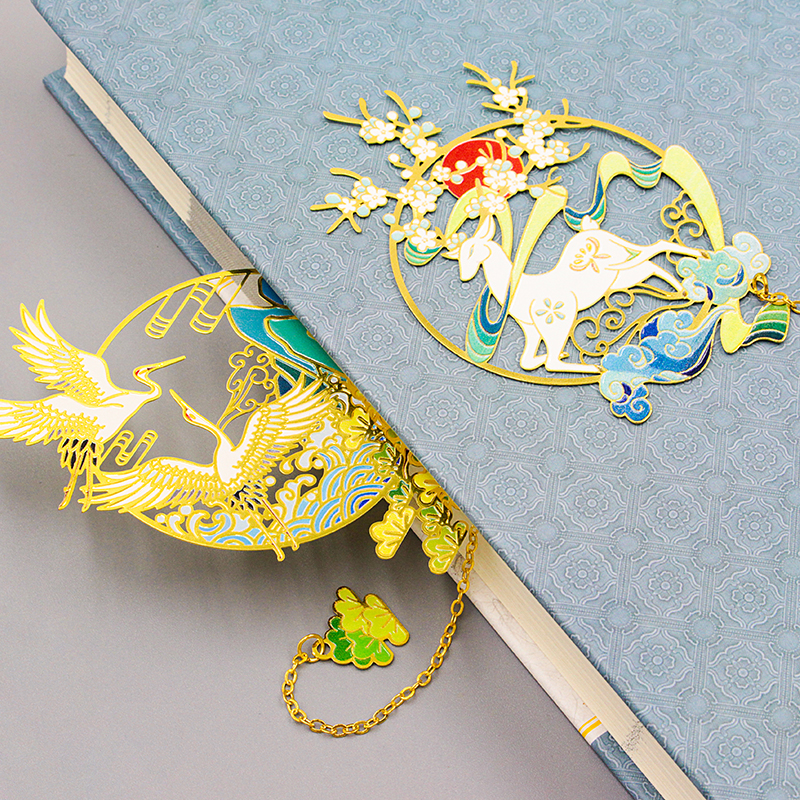
Different books need different bookmark thicknesses. A thin poetry book isn't the same as a thick journal or textbook.
Hardcover or thin book → choose thinner bookmarks (around 0.25–0.3 mm) to avoid putting pressure on the spine.
Thick books or journals → go slightly thicker (around 0.35–0.45 mm) for better page support.
Keep in mind: the tighter the book's binding, the thinner the bookmark should be.
| Book Type | Recommended Thickness | Why It Works |
|---|---|---|
| Hardcover / Light Novels | 0.25–0.3 mm | Prevents bulging or page bending |
| Thick Journals / Textbooks | 0.35–0.45 mm | Provides balance and durability |
The more complex your design, the more support it needs. If you're adding decorative finishes, your material must handle the extra process.
Embossing, hot stamping, or die-cut shapes → use thicker bases (≥ 0.35 mm).
Simple laminated printing → 0.3 mm is usually enough.
If the design includes metallic foil, UV gloss, or perforations, increase thickness slightly to avoid warping.
| Craft Method | Ideal Thickness | Reason |
|---|---|---|
| Embossing / Hot Stamping | 0.35–0.45 mm | Holds raised textures securely |
| Die-cut / Punch Design | ≥ 0.4 mm | Prevents tearing or distortion |
| Simple Lamination / Matte Print | ~0.3 mm | Keeps smooth surface and easy flexibility |
Every reader values something different — texture, durability, or sustainability. Choosing the right material makes the bookmark feel personal and practical.
Soft & natural feel → go for laminated paper, recycled card, or bamboo.
Durable & modern → pick metal, plastic (PP/PET), or acrylic.
Eco-friendly approach → use kraft or art paper with matte coatings.
| Reader Preference | Material Choice | Thickness Range |
|---|---|---|
| Natural and warm | Laminated / Bamboo Paper | 0.3–0.4 mm |
| Long-lasting and sleek | Metal / Plastic | 0.25–0.5 mm |
| Recycled or sustainable | Art or Kraft Paper | 0.3–0.35 mm |
Before customizing, think about who will use the bookmark. Age, habits, and reading environment all influence what feels “right.”
Students & children → light, flexible, waterproof materials (PP, EVA, or silicone).
Collectors & gift recipients → premium, slightly heavier materials like wood, metal, or thick art paper.
Travel readers → thin but durable options that slip easily into pockets or journals.
| User Group | Recommended Material | Thickness Guide | Key Benefit |
|---|---|---|---|
| Students / Kids | PP / EVA / Silicone | 0.4–1.0 mm | Safe, colorful, waterproof |
| Casual Readers | Paper / Thin Plastic | 0.25–0.35 mm | Light and comfortable |
| Collectors / Gifts | Metal / Art Paper / Wood | 0.3–0.5 mm | Premium look and durability |
A: Thickness affects how a bookmark feels, fits, and functions. Too thick can lift pages or mark the spine, while too thin bends or slips easily. The right thickness keeps pages flat and reading smooth.
A: For paper, 250–350 gsm equals about 0.3–0.4 mm. For card stock, 14–16 pt equals roughly 0.35–0.4 mm.
A: Yes. Bookmarks thicker than 0.5 mm may stretch bindings or leave dents, especially in thin or tightly bound books.
A: Metal and plastic bookmarks are the most durable. They resist tearing, moisture, and warping far better than paper or wood.
A: Around 0.3–0.35 mm (≈ 300 gsm) is best. It prevents ink bleed-through while keeping the bookmark flexible and neat.
The best bookmark thickness isn't one-size-fits-all. It's a balance of comfort, material, and purpose. For most readers, 0.3–0.4 mm feels just right—thin enough to glide, thick enough to last. Experiment, explore, and find the thickness that makes reading truly yours.
At CUGLE, we turn simple bookmarks into lasting keepsakes. Our team focuses on precision, comfort, and design — creating pieces that feel just right in every hand. Choose from a wide range of materials, finishes, and custom thickness options, all tailored to your reading style or brand identity. Whether you want elegant metal, eco-friendly bamboo, or soft-touch plastic, we make it exactly the way you imagine.
Explore CUGLE's customizable bookmarks — designed for readers who care about every detail.


